Client
Disney
Year
2015-2016
Axiom approached me to create a distinctive e-commerce experience that would set them apart in the crowded streetwear market. They needed a platform that would showcase their architectural-inspired menswear while providing a seamless shopping experience that reflected their brand philosophy of "structured minimalism."
Scope of Work

Impacts at a glance
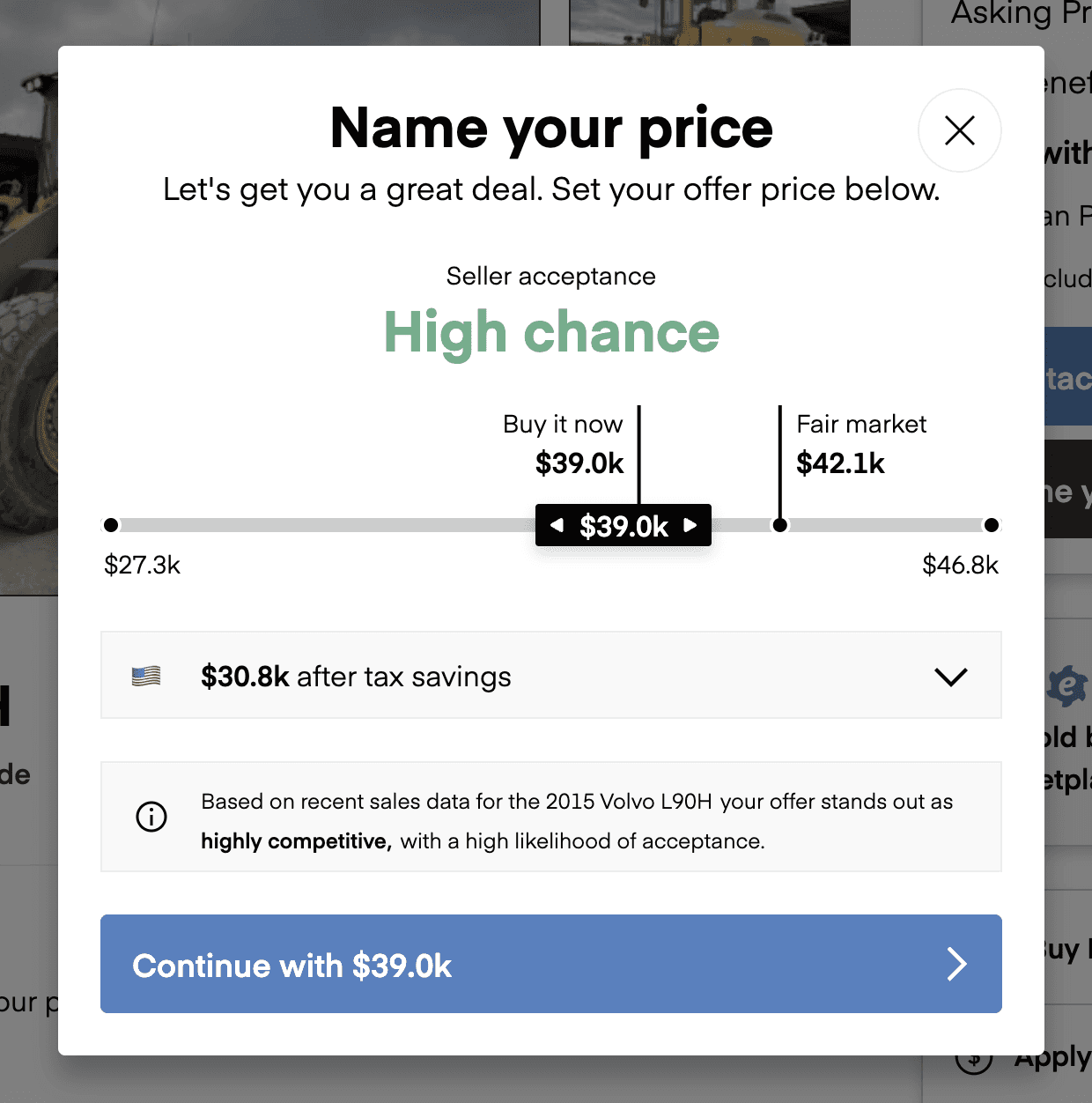
3x lift in lead form conversion on listings with "Name Your Price" tool enabled
30% increase in closed deals tied to the new offer flow
Cut down "what's your best price?" cold contacts to the sales team
Gave sellers a way to signal flexibility without lowering their list price publicly

Which allows your project pages to be highly adaptable.
Unlike traditional templates with rigid image slots, this system gives you complete freedom to present unlimited project images without modifying the template structure. Your portfolio adapts to your content rather than forcing your work to fit predetermined formats, ensuring your projects look professional across all devices.

Research
Add optional descriptions to explain your work.
I went in with three questions. Why are buyers bouncing? What do they actually want? And what do comparable marketplaces do that works?
Buyer interviews. I talked to recent buyers and people who'd contacted us but never closed. The pattern showed up fast and it was consistent. They assumed the price was firm. A few told me they figured Boom & Bucket was "more like Carvana than Craigslist," that the number on the page was the number. Others said they'd bought elsewhere because a competitor's listing let them submit an offer in two clicks.
Data analysis. I pulled funnel data on listings over the prior six months. Drop-off at the contact step was way worse than every step before it. Buyers were getting deep into listings, high intent signals everywhere, and then disappearing. I also looked at closed deals and found the gap between list price and final sale price was rarely zero. Sellers were already negotiating. We just weren't surfacing it anywhere in the product.
Competitive analysis. I studied how negotiation worked across eBay Motors, Facebook Marketplace, IronPlanet, MachineryTrader, and a few B2B equipment platforms. The patterns clustered into three models. Open auction (loud, anxiety-inducing). Private offer (buyer submits a number, seller responds). And "best offer" anchoring (platform suggests a reasonable range). The private offer model with smart anchoring had the cleanest UX, and it was the closest match to how heavy equipment actually changes hands offline.

You can select ratios for your images.
Choose from various aspect ratios to present your work in the most flattering format. This flexible system allows you to optimize each image display based on content type - whether you need widescreen presentations for landscapes or square formats for logos.

For example this image is using a 16:9 ratio.
Widescreen formats are perfect for showcasing device mockups, web designs, and panoramic visuals. The 16:9 ratio provides a cinematic feel that works exceptionally well for digital interfaces and presentation-style content.
And this one is using a 4:3 ratio.
The classic 4:3 ratio offers a balanced frame for product photography, print work, and traditional layouts. This proportion provides more vertical space, making it ideal for packaging designs, book covers, and print materials.


You can even add a second image.
Create powerful visual comparisons by placing images side by side. This feature is perfect for before/after demonstrations, showing variations of a design, or presenting multiple views of physical products. Paired images tell a more complete story of your creative process.